Friday, March 7, 2014

Honoring our women ancestors


Though they have no objective reality, gender constructs affect our place in society. They influence how much pay we receive for the jobs we do and the roles we play at home in the family. They affect which aspects of our personality we feel comfortable expressing and which we do not.They determine the clothes we wear, and they can impact our relationship to our own body ... This holds us back, limiting men and women to socially constructed boxes and causing a great deal of suffering for everyone." 
-the 17th Karmapa, Orgen Trinley Dorje

Today, March 8, is International Women's Day. While gender is -- on an ultimate level -- a projection, a construct, on a relative, or everyday, level, it matters. As the Karmapa says, it affects pay, appearance, how we're seen, how we're comfortable presenting ourselves.

For women, that's often meant not being seen, being comfortable with invisibility. But that diminishes everyone, not just women.

In Tibetan Buddhism, both the masculine and feminine qualities must be present -- and integrated -- for enlightenment to take place. Denying or hiding the feminine throws things out of balance. Bringing the feminine forward, then, is a step toward achieving balance, or equanimity.

In 2010 the Soto Zen Buddhist Association approved a document honoring women ancestors in the Zen tradition, the Zen Women Ancestors Document. Grace Shireson says that recognizing women ancestors "is a solid step toward bringing Buddhism more fully into the reality of Western life."

Because the historical women did not receive the same support as male practitioners, they were less
likely to become monastics, Shireson writes.  Women survived by banding together, offering support to their communities, not by withdrawing to remote locations and extoling the virtue of transcending worldy attachment.

"Women expressed their humanness and longing to actualize their vows amid daily life -- even as they lived with worldly attachments... Women's Zen teaching laments the loss of loved one and extols the beauty of life. No matter how deep their practice, their human heart is exposed."
The Zen document begins with Prajnaparamita -- the ground of being or womb of totality -- and moves through a list of dozens of names of women Zen practitioners. Without knowing the stories, the names may not mean much.

But the practice is available to us all. Every one of us had women ancestors. They may not show up in the formal lineage chants that Buddhists speak, but we could not be here without them.

I've been thinking about personal lineage lately as I've witnessed a friend reflect on his father's death and my teacher share about her mother's passing. I see that lineage is not just the line of practitioners that connects us to the ground of being; it's also the people whose DNA is in our bones, whose views were our views.
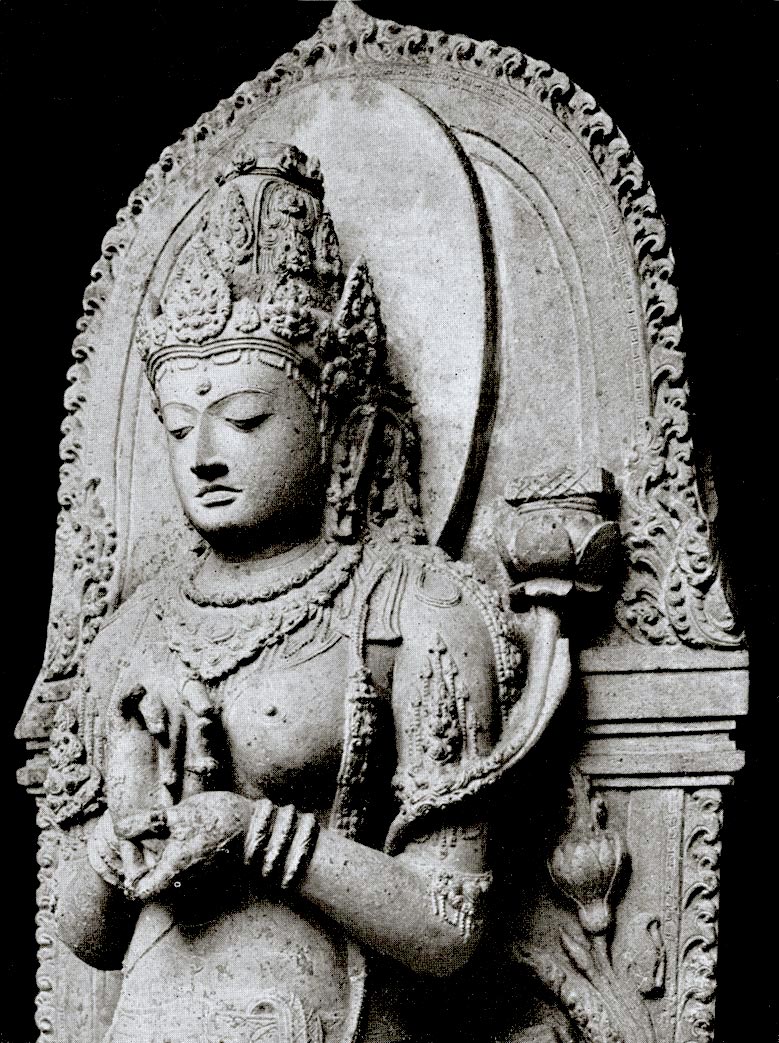
-- Think of a woman in your life -- a mother, aunt, teacher, mentor -- who helped you on your path in some concrete way. Consider what they've done for you and feel the preciousness of that auspicious connection.
-- Then think of someone you don't know in real life but who has inspired you through her example: An author, teacher, someone you saw on a video or heard speak or follow on Facebook or Twitter for daily doses of wisdom. Consider how this person has enriched your life.
-- And finally, consider the sacred feminine, the accepting, non-judgmental space of emptiness, and contemplate how you experience this. Maybe you carry Tara or Mother Mary or Sophia in your heart; maybe you're drawn to the moon. In the vajrayana, the feminine represents wisdom, space. (The masculine represents action.)

Recognize that, honor that. Sit in the presence of your personal women's lineage, and integrate it into your being.

Recognize that, honor that, and integrate it into your being.

We cannot become a buddha unless both the qualities that are labeled 'feminine' and those qualities that are labeled 'masculine' are present and integrated within us. ... It is beneficial and important for us to have all these qualities, regardless of the gender they are associated with.
-- the 17th Karmapa


Monday, March 3, 2014

Surrender to the present moment


“Surrender Dorothy,” the Wicked Witch of the West wrote in the sky in the movie “The Wizard of Oz.” What she meant was, “Give up. Stop fighting. Stop struggling.” 

Taken out of the “us vs them” context, that doesn’t sound so bad. No fighting, no struggling – sounds pretty good, actually.

In Buddhism, surrender is not about handing over our power to another entity or becoming subservient. It’s about giving up, not giving in – as the song says, “I’m gonna lay down my sword and shield … ain’t gonna study war no more.” It’s about surrendering our small, limited concept of ourselves in order to see the larger, interconnected, fullness of being. We give up the things that keep us trapped and gain freedom.

Surrender is similar to the concept of renunciation in Tibetan Buddhism. In “The Wisdom of No Escape,” Pema Chodron writes that “it has to go with letting go of holding back. What one is renouncing is closing down and shutting off from life. You could say that renunciation is the same thing as opening to the teachings of the present moment.”

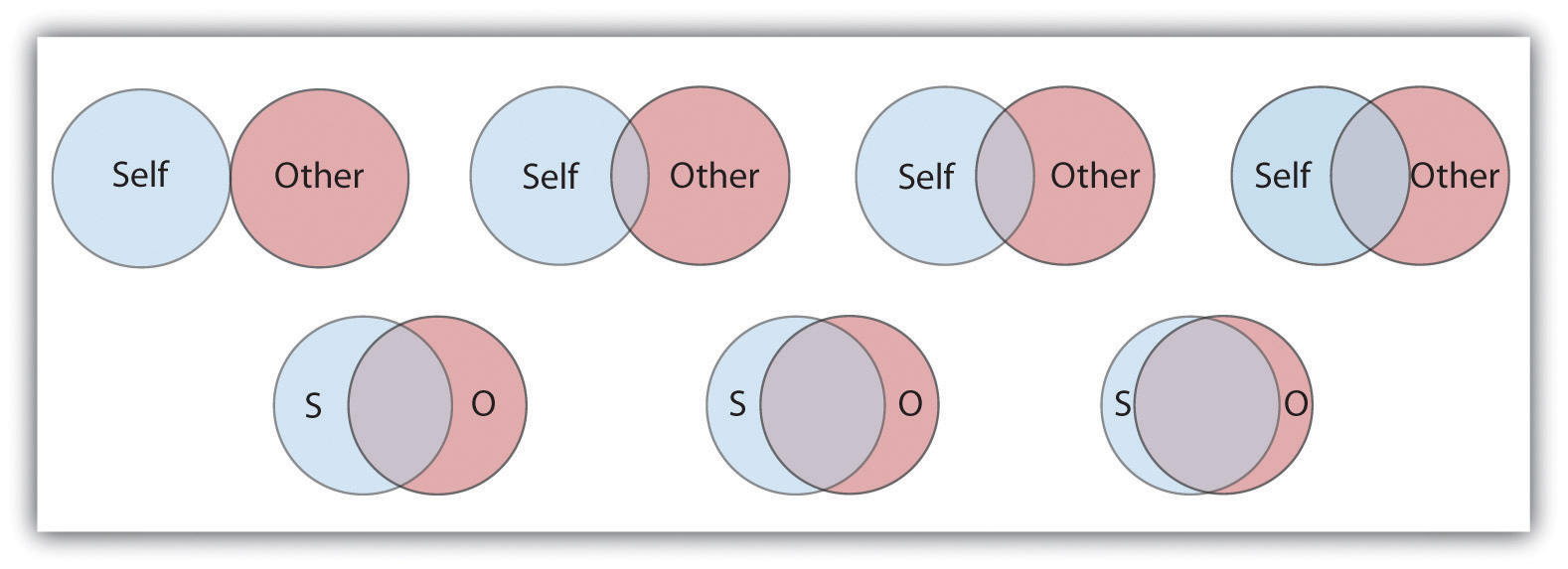
What we surrender are the self-defensive strategies that keep us separate from others, that lock us into the self-other binary. Instead of measuring ourselves and our accomplishments against others, clinging to what we’ve managed to accumulate, we see that we can be OK without that. “The ground … is realizing that we already have exactly what we need, that what we have already is good,” Chodron says.

It’s also seeing that everyone stands on that same ground, that everyone is inherently whole and worthy of respect and dignity. If we are truly living in that place, there’s no need to struggle, to fight for a bigger piece of the pie, to try to defeat everyone else and come out on top.

Letting go, surrendering the things that keep us apart and opposed ends the struggle and lets us relax.
“The purpose of a spiritual discipline is to give us a way to stop the war, not by our force of will, but organically, through understanding and gradual training,” Jack Kornfield writes in “A Path with Heart.” … “When we let go of our battles and open our hearts to things as they are, then we can come to rest in the present moment.”


Friday, February 28, 2014

Swiffering your psyche

In the Tibetan calendar, Sunday is Losar, the start of a new year (the year of the wood horse). Losar's eve -- today -- is celebrated not with confetti and crystal balls but with cleaning, wiping away the outward schmutz of the old year.

A Losar shrine
According to yowangdu.com, a Tibetan culture website:

Losar-related rituals are actually divided into two quite distinct parts. First, we close out the old year and bid goodbye to all its bad aspects and negativities, with activities that center on the eve of the last night of the year, the 29th day – Nyi Shu Gu – of the Tibetan calendar.

Only after that do we turn our attention to welcoming the Losar –  the “new year”  – and inviting all good, auspicious things into our homes and our lives.
For Tibetan Buddhists, the cleaning extends to the psychic and energetic aspects of existence, as well as the altars and kitchens. The 10 days that precede today (the eve being a neutral day) are said to be a time of heightened experiences of what might be considered bad luck: lost keys, smashed fingers, petty arguments.

Shambhala teacher Lodro Dorje writes:

Outwardly, this negativity manifests as discord, opposition, desires, accidents. Inwardly, it manifests as emotional fixations, sickness and unbalanced inner energy in the psycho-physical body. Secretly, it manifests as fixed beliefs concerning ourselves, and the reality of subtle and spiritual aspects of existence. For instance, we might think that the psychic and spiritual forces of life are solidly and definitely external from our own awareness. Or we might think that such dimensions positively don't exist and don't function at all. Both extremes create trouble for us.
Thinking that they do exist is a problem and thinking that they don't exist is a problem? Now, that is a problem. Or maybe the thinking is the problem.

You know how to clean the house. How do you spring clean your mind?

The traditional remedy is to increase practices to please the dharma protectors or dharmapalas.

But maybe you think that's the equivalent of leaving sugar water out for the faeries. Or socks for the house elf. You just want a nice Swiffer for the psyche.

Lodro Dorje offers four thoughts:


1) Keep your conduct straightforward and kind.

2) Be open to the fundamental nature of awareness, which is the same in you as in the enlightened beings.

3) Maintain your meditation practice so that you can "tame, ride, and transmute" your personal energies.

4) Pay attention properly to the details of life.


And watch your consumption of rice beer.

Friday, February 14, 2014

Real Happiness: How to answer the phone

One day I got home from work and found the electricity was off. I reported it to the power company, which gave me an estimate of 90 minutes or so, but when I called back at that time to check, it wasn't even listed as an outage.

I spoke to a representative, who informed that one of the two circuits in my house was working so I had half power, which was not considered an outage and also was not considered a priority. There was no estimate on restoration.

The thing was, the circuit that wasn't working powered everything important -- stove, refrigerator, heat, sump pump. I could sit in my family room and watch TV, but that was about it. What I wanted to do was get warm and cook food. That was impossible.

I did not take it well that my functional outage didn't qualify as an official outage. I expressed that clearly. I suppose you could call it outage outrage. My call was transferred. And my steaming righteousness was met by the kindest customer service representative I've ever encountered. Grace had a musical voice and a soft, pleasant attitude. She empathized. "It's awful, isn't it?" She made typing sounds. She promised to look into it and call me back. I didn't believe her, but my anger was disarmed. My concern was heard and acknowledged.

Remarkably, she did call back, still full of good will and good nature. And she had an estimate. And the power came back on.

My outrage, I saw, was more about having my concerns dismissed than about the lack of electricity. I knew it wasn't urgent and that it might take time, but I wanted the electric company to acknowledge that it was real.

I thought about this while reading the chapter on communication in Sharon Salzberg's "Real Happiness at Work." She writes: How we communicate has everything to do with maintaining well-being and harmony at work.

She suggests using the Buddha's criteria for right speech: Is it true? Is useful at this moment? Can it be said in a kind way?

I work at a newspaper, and part of my job is taking calls from the public -- everything from tips on  political corruption or decisions made in secret to questions about a notice of a church supper. At times, it is inconvenient to answer the phone, but you almost always do it because you don't know what information might be offered.

I used to be impatient with people who called about notices for community events. I have bigger fish to fry than your shrimp dinner, I thought.

But then I realized that the people who called me were just as invested in their issue as I was in getting my power back. For a volunteer-run nonprofit, getting a notice in the community newspaper can be the difference between a successful fundraiser and one that doesn't cover costs. People who don't know how accessible we are might be intimidated by making that call. And communicating that I felt they were unimportant was not skillful.

Grace taught me that.

So now, when my phone rings, I take a breath before I answer. I remember that the call is important to the person making it, even if they are from a public relations firm. And I do my best to sound welcoming.

I may not be able to do what you want, but I don't need to try to make you feel worse about that.

Sharon offers three rules for mindful communication: "I" language, body awareness, and listening. All of these help us to be present in the conversation rather than projecting motivations or meanings onto it.

To quote Bill Murray, "I’d like to be just more here all the time, to see what I could do if if I were able to not get distracted and not change channels in my mind and body . . . to be my own channel, really here, and always with you. Like you could look at me and go, 'Okay he’s there, there’s someone there.'" 

Because if you're here, then I can be here. And then we can get something done.


Friday, February 7, 2014

Real Happiness: DIY Love

I'm intrigued by the idea of self-compassion. It feels foreign and exotic to me, like something people do in some remote land just discovered by intrepid explorers. Shangri-la, maybe -- tucked up in the mountains, far away from contemporary life.

Clearly, it's not a concept I learned growing up, when I was taught that God helps those who help themselves. God doesn't help those who ask others for help. Do It Yourself and do it right.

I was profoundly moved when I first encountered metta meditation. Making the aspiration that I would be happy, safe, healthy, and know ease -- the same as other people -- boggled my mind. Over time and repetitions, it opened my heart. I could see that, just like me, people I loved and those who annoyed me wanted to be happy, that those irritating things they did were not aimed at annoying me but at finding some sprig of happiness. I stopped insisting that people react the way I thought appropriate and focused on how to work with the situation.

But self-compassion remains theoretical quite often. A few months ago -- seven years after I started meditating -- I was still asking, How do I meet pain with compassion? What does that mean? What does that look like? How do I do this thing?

So I was delighted that Sharon addressed this in the chapter on compassion. This is really helpful.

Self-compassion has three components, she writes: Mindfulness, a sense of common humanity, and kindness.

This involves bringing awareness to painful emotions that "arise due to our self-judgment or difficult circumstances;" understanding that we are human and therefore imperfect, and being "warm and understanding when we suffer, fail, or feel inadequate, rather than ignoring our pain or flagellating ourselves with self-criticism."

I've actually been working with taking better care of myself at work. Like many people, I work at a place that is under-staffed and always busy. My inclination is to take on things that need to get done because, well, they need to get done. So I've ended up with a disproportionate share of the tasks, and I work without breaks trying to get it all done. But I noticed a while back that I was starting to resent people who are good friends (a painful emotion), and I noticed that, and I decided that something had to change.

I began making it a priority to get away from my desk, at least during lunch time. Ideally, I get outside and go for a walk, which has the added benefit of cleaner air and sunlight. If the weather's bad, though -- and it has been -- at least I move away from my computer screen. That's being kind to myself.

Which leaves being human and making mistakes.

Working in a business (a newspaper) where mistakes are shared with thousands of readers and where perfection is expected, I can get into a mindstate where perfection seems like a realistic goal. It's not, though. Humans mess up, even when they do things with good intentions. I've been willing to extend that to others -- not taking personally things said by someone who's obviously under stress, for example -- but not seeing that in myself.

I lead a meditation class once a week, and I generally tell students to consider the time they spend meditating as time spent getting to know a friend. You wouldn't think twice about sitting down with someone for 30 minutes and listening to what's in their heart, but you think you don't have 30 minutes to meditate. Think of it as time you spend letting the mindbuzz dissipate and getting to know yourself, as a friend, with kind, compassionate attention.

If a friend makes a mistake, I try to help her find perspective about it's importance and to decide what to do now, not castigate her for making it. If I am being a friend to myself, I need to turn that attitude inward.

Know what you're feeling, accept that you're human, and be kind. Do-it-to-yourself love.

Friday, January 24, 2014

Breaking Good


When you're making a change in attitude or behavior, you can -- as Tina Turner says -- do it nice and easy, or nice and rough. That's true whether you're singing "Proud Mary" or vowing to spend an hour without electronics for Responsible eConsumption month.

Part of the mindfulness practice behind Responsible eConsumption month is to power off your electronics for an hour a day. I chose to make that the first hour of my day, when I usually listen to music and check email. I discovered that the quiet let me tune in to myself. Rather than bypassing a bad mood with 30 minutes of funk, I had to face it. Instead of pushing it down or covering it up, I looked at it and let it go instead of letting it fester.


That should be incentive to keep going, right? Results should reinforce behavioral changes.
But this week, I broke my vow. And the practice here is being OK with that.

Being OK with not living up to expectations (or my perception of what's expected of me) has been a main focus of my practice since I started meditating and studying Buddhism seven years ago. It's been a lifelong struggle. In my family, meeting expectations was how you earned love, so it was crucial to do it right. And that's hard to do all the time.
 
Notice that I said "I broke my vow." That's harsher than "I didn't follow through on my intention," which is more accurate.

And all of that is true only on the outer level. If you look only at what meets the eye, I failed because I put on Prince and danced around the kitchen while making breakfast on Wednesday. (As if dancing around the kitchen to Prince could ever be a fail.)

On the inner level, the intention is to know what's going on in my mind rather than mindlessly follow habit. And on that level, I succeeded. The music, and the dancing, was a reflection of my inner state of boppy happiness, not an attempt to cover up or bypass. It was mindful dancing, not mindless movement.

And that's really why I practice -- so I can be in touch with the boundless, encompassing, accepting, non-judgmental joy that is our inherent state instead of holding myself to impossible standards, to work with my inner intention rather than outer appearances.

For the benefit of all beings.

Dancing breakfast by Robin Ward illustration.
Lion breakfast by Daily Mail / Rex Featur / Alex Coppel

Monday, January 13, 2014

Buddhism and jazz

Jazz musician Herbie Hancock has been named the 2014 Norton Professor of Poetry by Harvard. He'll be delivering six lectures, not on poetry per se but telling stories from his personal history, including the interplay between creativity and Buddhism.

He talked about his introduction to Buddhism (he practices Nichiren chanting, as does Tina Turner) through his bass player in a 2007 interview.

The cool thing is that jazz is really a wonderful example of the great characteristics of Buddhism and great characteristics of the human spirit. Because in jazz we share, we listen to each other, we respect each other, we are creating in the moment. At our best we’re non-judgmental. If we let judgment get in the way of improvising, it always screws us up. So we take whatever happens and try to make it work. We try to make it fit. We try to enhance it.