Showing posts with label gender. Show all posts

Saturday, January 24, 2015

Does Buddhism Need Men?

As a practitioner of Buddhism, I don’t think about myself in terms of gender. I try to cut through such concepts and rest in the true condition of unborn and unceasing luminous emptiness, the ground of being. -- Lama Tsultrim Allione

I went to a retreat on the sacred feminine in Buddhism last weekend, led by Jetsunma Tenzin Palmo. Predictably, it was practically all women. The few men there were congratulated for their bravery and openness in attending. This feels creepy to me, like when I took women's studies classes in college and the professor would make a point of calling on the men so we could hear their comments. Isn't it ironic. Male perspective is the ocean we swim in, and even when we put women first we still put men more first.

That weekend we learned a Green Tara practice. Lama Tsultrim calls Tara "the first feminist" in Buddhism. Tara was an Indian princess and highly accomplished practitioner who was told that it was a shame she was a woman; she'd have to come back as a man to get enlightened.

The princess answered back brilliantly, demonstrating her understanding of emptiness and absolute truth, saying: “Here there is no man; there is no woman, no self, no person, and no consciousness. Labeling ‘male’ or ‘female’ is hollow. Oh, how worldly fools delude themselves.” (Taranatha, Origin of the Tara Tantra).
And yet gender, while ultimately an illusion, on the relative level often is a veil as effective as a blackout curtain.

Western sanghas are predominantly female. Is that a problem? Do we need men? (Not according to a 109-year-old Scottish woman who says the secret to a long life is avoiding men.)

I went to an all-girl high school, and part of what that meant was that there were no boys to be class president, to be star athletes, to talk over or interrupt (traditional male speech patterns). Girls just did it all.

I'm not arguing that men --  or anyone -- should be excluded. Do they need to be courted? Does Buddhism, which hasn't cared about bringing women into its folds since it was founded, need to change to bring men in? Does it lose legitimacy if the sangha is predominantly female, if the ratio of male-to-female teachers reflects that? (For now, men predominate.)

Kozo Hattori, writing on the blog of The Greater Good Science Center, a project of the University of California at Berkeley, back-handedly explains why men need Buddhism in "Five Ways to Make Mindfulness More Manly." Men have embraced mindfulness meditation -- it's used by the military,
by tech companies, and sports teams -- but they stop at being mindful of what's happening with them. In Buddhism, it's taught that mindfulness leads to compassion -- as we become aware of our experience, we also become aware that others share the same experiences and emotions, and that touches our hearts, opening them. Not so with the modern mindfulness movement, Hattori says.

“Men tell you what is on their minds, but not what is in their heart,” says Elad Levinson, who has 40 years of psychotherapy and 20 years of leading men’s groups under his belt. Perhaps not coincidentally, boys and men commit the vast majority of violent acts, from domestic violence to murder. Many struggle with expressing empathy and compassion.

Would the world be better off if men were more compassionate? Absolutely, since men run the world. Therefore, it's the bodhisattva's work to bring men to Buddhism for the benefit of all beings, I suppose. Particularly into programs that focus on development of compassion, like Green Tara practice.

In one version of Tara's story, it's said that she came to life from the tears of Chenrezig, aka Avalokiteshvara, the buddha of compassion. He was crying because he realized the difficulty of saving all sentient beings from samsara; she sprang up to help him. If it happens, he'll probably get all the credit.

"The absolute truth of the emptiness of gender and the relative truth of a real historical misogynist attitude in Buddhism lay side by side in Tara’s story," Lama Tsultrim writes. The absolute doesn't trump the relative; both exist simultaneously. We can't live from our buddhanature without first peeling away the sexism that hides it.


Thursday, May 23, 2013

And she will be smart

Speaking to an audience at the University of Oregon last week, the Dalai Lama discussed the possibility that his successor could be a woman. Women, he said, are more sensitive, compassionate, and nurturing. He pointed to his own mother and listed the maternal characteristics women share.

 And then he leaned forward, as if to share a confidence with the thousands of people there. "And she will be attractive!" he said, and leaned back laughing.

I have the deepest respect for the Dalai Lama, and I watch his talks as often as I can because I think he is genuinely lovely, kind, and respectful. He is an amazing balance of qualities: happy, serious, intelligent, accessible, caring, and firm. I appreciate his support for women, including, I'm told, the often-neglected Tibetan nuns.

I am sad, though, that he describes women this way, using maternal stereotypes and bringing in looks, even as a joke.

Lama Tsultrim Allione, a New Hampshire native who became a Tibetan nun and now leads a dharma center devoted to promoting the feminine, says she was drawn to Tibetan Buddhism precisely because it presented a fuller view of women than western society. 

"What I found powerful was the blissful and active aspect of the feminine," she says. "The dakini is powerful and naked -- and she's wise." Dakinis, the female embodiment of wisdom in Tibetan iconography, are also wrathful and spiritual.

"The positive feminine isn't only about that compassion aspect," she says.

His Holiness certainly knows that. Despite his forward-looking work in science and his incredible compassion, he's a 20th century monk when it comes to discussing gender. Dalai Lama is a difficult job -- he's the spiritual leader of the displaced Tibetans, the face of Buddhism to much of the world. I hope his successor is compassionate and kind and wise and fierce and blissful -- and an extraordinarily gifted woman who can overcome the opposition her position would generate.

Friday, March 15, 2013

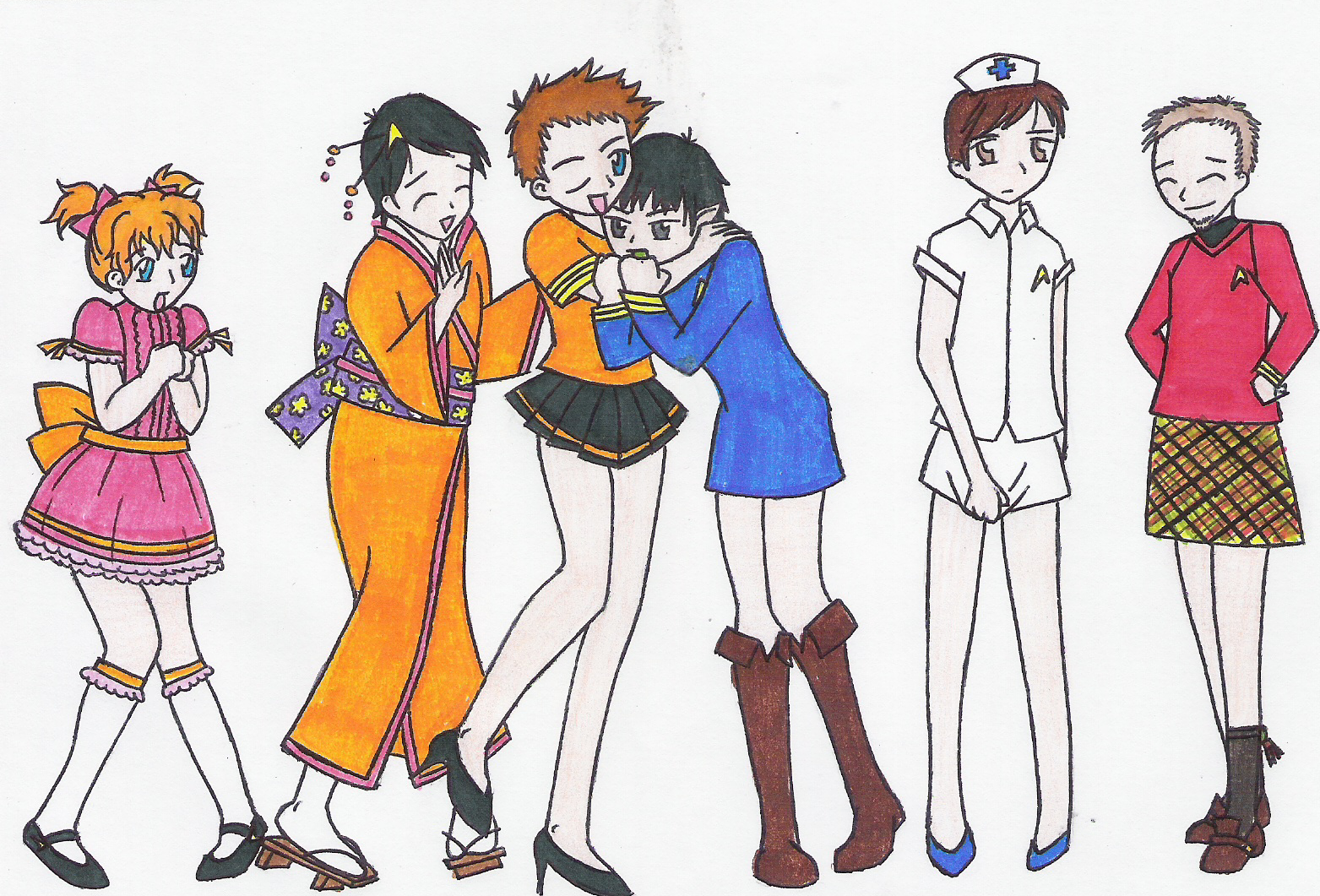
You are not your pants

Gender is a dimension of ego, Lopon Rita Gross says, and the one we cling to most persistently. It's also one that we're least like to examine. It's not included in traditional Buddhist meditations designed to deconstruct identities and lead to insight on egolessness.

Buddhism both proclaims that enlightenment is without gender and places gender-based restrictions on practitioners, seen most clearly in the rules regarding Buddhist nuns and their status."They have not questioned why rules about gender are so important when nothing in the phenomenal world really exists," Gross said in her talk, "Clinging to Gender Subverts Enlightenment," which was a keynote address at the Gender Studies Symposium at Lewis & Clark College in Portland OR. (Divining Meaning: Meditations on Gender and Religion.)

"Gender may well be the last component of our composite ego to be surrendered," Gross said. "People rarely question gender's centrality. They don't see the contradiction."

Yet, when they're asked to give up gender-expressive traits, they resist, even Buddhists dedicated to achieving egolessess. Gross says male teachers in her sangha have resisted wearing robes because they uncomfortable not wearing pants.

"If you can't give up your pants, how are you ever going to give up your ego?" she asked.

Gross proposes adding contemplations about gender to the traditional mahamudra investigations, which look for evidence of the self.

What color is your gender?
What is its shape, its texture?
Where is it located -- is it internal or external?

She also suggest contemplating
-- how many of my habits are conditioned by gender norms and expectations?
-- how uncomfortable would it make me to do things differently?
-- when we meet someone, the first thing we note is their gender. what assumptions do we make based on that?
-- what if we interact with someone whose gender is unclear, in person or via email? How do we respond to being without the ground of gender?
--ask yourself - what makes you a man or woman. If someone guessed your gender incorrectly, how would you feel?
-- Try out the body language associated with the other gender.

It takes training to tease out gender-clinging, Gross said, and to realize that letting go of our attachment is necessary to enlightenment.

"The problem is rigidity and fixation when people cling to gender. If one does not make an ego out of gender, one would still know if one is a man or a woman," Gross said.

But, she added, we would wear our identities more lightly, being willing to grow and change.