Friday, August 8, 2014

Release your heart

Today is a full moon. I could tell even before I checked the calendar, based on the phone calls that came in to the newspaper where I work. That's not unusual -- the callers range from those with tomatoes that resemble Richard Nixon to ones who tell you they're wearing tinfoil on their heads while they talk on the phone about conspiracies.

Friday's calls had a different quality than the usual lunacy, though. The callers wanted to tell me about kindnesses they'd experienced. And they simply wanted to share their gratitude and joy -- they didn't even launch into the usual rant about how we only report bad news and how about writing something good for a change.

One was a big deal: A woman was lying on a downtown sidewalk in May, and another woman stopped to check on her, then called 9-1-1, saving her life. The woman didn't remember any details but wanted to thank her unknown helper. She couldn't write a letter to the editor because, she said, she had a stroke and "all I can do is talk."

Another caller praised a newspaper customer service worker, who had driven to her disabled brother's home to hand him a newspaper after a delivery snafu. Getting the newspaper is the highlight of his day, she said (giving me a highlight for my day), and getting a special delivery gave him great joy.

The calls reminded me of the importance of developing an attitude of kindness, seeing the small ways that the world supports us rather than focusing on the insults.

The magic of metta practice is not that it makes us more loving toward the person we love or tolerant of the annoying person. It is that it turns our mind. We begin to see everything with the wide eyes of compassion rather than the narrowed eyes of judgment.

The Buddha identified 11 benefits of lovingkindness (speaking to monks, so Buddha says "he"):

1. "He sleeps in comfort. 2. He awakes in comfort. 3. He sees no evil dreams. 4. He is dear to human beings. 5. He is dear to non-human beings. 6. Devas (gods) protect him. 7. Fire, poison, and sword cannot touch him. 8. His mind can concentrate quickly. 9. His countenance is serene. 10. He dies without being confused in mind. 11. If he fails to attain arahantship (the highest sanctity) here and now, he will be reborn in the brahma-world.
These advantages "are to be expected from the release of heart." What a beautiful phrase. If you released your heart from its constrictions, from its limits, from its cages, where would it go?

What if you looked for the kindness in the world instead of the meanness? What if you realized the ground-floor gratitude of being able to take in breath? How would that change your life?


Tuesday, August 5, 2014

Identity

Last month at a group meditation retreat, in silence, among people who aren't familiar with me, I was known to some as the woman with coffee -- coffee was something of a contraband thing, not prohibited but not provided. I brought my own. To others, who shared my assigned daily work of cleaning the community center, I was the one who obsessively went over the checklist each day to make sure everything got done. I was a meditator, a student, a roommate.

Without the usual social cues of speech and context, identity gets stripped down to behavior and appearance. Name and history and stories don't mean much when you aren't having conversations. And that's part of what happens when you sit in silence -- you get glimpses that identity is mutable, relational, contextual, rather than something solid that you own. The stories that we think define us carve habitual patterns that can be hard to break out of, but our minds are the only things forcing us into those ruts.

"If you're determined to think of yourself as limited, fearful, vulnerable, or scarred by past experience, know only that you have chosen to do so. The opportunity to experience yourself differently is always available." —Yongey Mingyur Rinpoche 

In any given day, each of us has many identities -- spouse, pet owner, parent, householder, employee, customer, etc. -- even though we're only one person. We can't be all things to everyone but we can be many things to many people.

Seeing the multiplicity of identities and the lack of solidity in each one allows us to wear our identities loosely, leaving room for things to move in a different way. A boss doesn't always have to be authoritative; sometimes listening to others' ideas is appropriate. A parent doesn't always have to know the answer -- knowing how to look something up or being willing to try something we're not expert at can be a good lesson too.

"Misfortunes and obstacles to practice do not exist intrinsically. For something to be a misfortune for me, I must identify it as such," Buddhist scholar B. Alan Wallace says. If we refuse to identify something as an obstacle but see it instead as an opportunity or a challenge, we approach it differently. "We can then rebound from these calamities with courage and understanding, instead of wilting under their pressure," Wallace adds.

The Buddha said that there is no solid, permanent self or identity -- all we have are our actions, our karma. And we can always choose to act differently.  We can't chose our race or whether we have a disability that affects how we move or other visible characteristics, but we can choose how we relate to that identity, just as others choose how they relate to that in us. Do we define ourselves by what others see in us or do we focus on showing them something that's hidden? Do we chose to spend time with others who share an aspect of our identity or to vote in a bloc -- identity politics -- or do we cast a wider net?


Saturday, August 2, 2014

Beginner's heart, loving heart

In his classic book, Zen Mind, Beginner's Mind,  Suzuki Roshi succinctly pointed to our original nature as our true nature -- unfabricated, unfiltered, disentangled from preconceptions that color our view.

"In the beginner's mind, there are many possibilities, but in the expert's there are few," the book begins.

What if we extended that to our hearts -- if we cultivated beginner's heart? What would that be like?

If you could go back to the the firsts in your life -- the first time you drew a breath or recognized a caregiver's face, held hands, received a kindness, received a heartfelt thank you -- how would that feel? What would it be like to experience affection without all of the concepts and questions we layer onto it: What does this person really want from met? Is this The One? Will it last? Will they expect something in return?

What if we could simply see the world with an open heart, without anticipating arrows headed toward it?

I saw the phrase "beginner's heart" this week, and it stuck with me as I was thinking about the Interdependence Project's month of metta meditation in August. Metta is a practice of cultivating beginner's heart, of recognizing that underneath the labels we stick on ourselves and others is a common, untrained, open, and accepting space.

We all start out with open loving hearts, but as we gain experience we build walls. Noah Levine describes as building a papier mache shell layer by layer; each disappointment or heartache adds a piece of paper, maybe tissue paper, maybe corrugated cardboard, until the heart is well-protected. Nothing gets in or goes out. But the heart is constricted; it can't expand beyond the space the shell allows.

Beginner's heart, though, is as big as the sky.

When I do metta practice, I try to remember that each person -- the neutral one, the loved one, the irritating one -- has this heart inside them, covered over by their own layers of hurt and fear. And if I can touch my own beginner's heart and let go of whatever concepts I have about them that land them in those categories, I can reach out for that. And when my heart feels that shared space, there is an openness where love flows.

If all else fails, I think, "Well, their mother loves them." And knowing how I feel about my kids, it's possible to see them with the eye of lovingkindness rather than judgment.

In Buddhism, the heart and the mind are seen as one thing, the heart-mind, not the two distinct aspects of ourselves that Westerners generally see. We think the heart wants what it wants, and the mind knows what's good for it. The heart handles emotion, the mind does analysis. We can use that for this contemplation.

What if you could let down the defenses around your heart? Maybe for a 15-minute metta practice? Would that change the world? Or just your view of it?  


Thursday, July 24, 2014

Celebrating 50 years -- please continue for many more


I had the immense good fortune of receiving teachings from her in June on the 37 practices of a bodhisattva. You might think (I did) that someone who's been a nun for so long would be removed from daily life and, while admirable, be difficult to relate to. In this case, you would be so so wrong. She is delightful -- truly filled with delight -- and animated. She shares her deep knowledge with great humor and frequent laughs. Her smile stretches her face, and her blue eyes spark. She is fervent, intelligent, and experienced.

Fifty years ago today, Jetsun Tenzin Palmo was ordained as a novice Buddhist nun by Khamtrul Rinpoche, one of the first Western women to take the vows. Forty years ago on the same date, she became the first Western woman to be fully ordained. It was an auspicious occasion -- Jetsunma is still teaching, re-established a lineage of Tibetan nuns, and is fighting for women to get the teachings they've been denied for centuries.

 She discovered Buddhism as a teenager in England (and walked around town in what she thought approximated Buddhist robes until she met some actual Buddhists and saw they dressed like other people). She learned about an Englishwoman who ran a place in India where Tibetans who'd escaped from the Chinese takeover of their country, and moved there, meeting many newly arrived high lamas. She became a nun and spent seven years meditating in a cave in Tibet. (Her story is told in the book Cave in the Snow, or you can read the abridged version here.)

She was made for the solitary meditative life, but her plans to go back to deep retreat were repeatedly thwarted by events. Now she runs a nunnery, Dongyu Gatsal Ling, re-establishing the nuns lineage in her tradition. She hopes to get the nuns the teachings she was denied because she is a woman.

During a Q&A, Jestunma was asked if she had any disappointments about her experience. She replied that she feels like a failure -- causing audible gasps from the devoted attendees. Her goal was to become enlightened in this life, she explained, and she was unable to get the traditional teachings that would lead her there because she is a woman.

As heart-breaking as it was to hear this extraordinary woman, who has such deep understanding of things I can only glimpse, confess to feeling like a failure, it was also reassuring, in some ways. If she's not enlightened, that means she has to stay and teach us and return in future lives to lead us beings toward nirvana. And it was proof that feelings -- sadness, happiness, anger -- continue to happen even after years of study and practice and that it's possible to feel them, genuinely, and let them pass, like the clouds in the sky.

After all, as Jetsunma said, it's all rainbows.

You can see tributes to her on her Facebook page.

Saturday, July 19, 2014

Seeds of hatred, seeds of love


Buddhist teacher Jack Kornfield trained as a monk in Burma 40 years ago; recently, he went back and observed first-hand the seemingly contradictory Buddhist campaign against Muslims there.
An ethnic Rakhine man holds homemade weapons as he walks in front of houses that were burnt during fighting between Buddhist Rakhine and Muslim Rohingya.

In a week where violence and aggression dominated the news, it's worth reading his entire article, which delves into the interdependent causes of the violence: poverty, political insecurity, and fear of The Other.
Traveling across Burma recently, I encountered some of these monks who are drumming up hate and jingoistic fervor. They don’t want to talk about peace and have succeeded in sowing mistrust across much of the country. Under their influence, taxi drivers and shopkeepers from Rangoon to remote towns talk about their fear of a Muslim takeover and “the Buddha’s teaching” that sometimes violence is needed to protect the nation.
The most obvious cause is economic: the already poor and disempowered residents of the area fear an influx of immigrants who will take what little they have, even though some of the "immigrants" have lived there for many years and are their neighbors.

I witnessed firsthand the results of the spreading violence in the town of Lashio in northern Shan state, where this past year a mosque, businesses, and a Muslim orphanage were burned not far from the town’s most revered pagoda. While the local Buddhists I spoke to were friendly, they were also worried, and from their ranks came mobs who torched their Muslim neighbors.

How does this happen in a primarily Buddhist nation? Kornfield points to several factors:

-- The radical monks have linked Buddhadharma with nationalism, overriding the Buddha's message that hatred will never overcome hatred and replacing it with the idea that it's OK to kill some people.

-- "With the lifting of military dictatorship, simmering ethnic and religious tensions are being exploited by misguided monks, political groups, and the remnants of the dictatorship to gain power ... Radical monks play on the historical memory of Muslim expansion across Asia in formerly Buddhist cultures. Scare stories about Muslims raping Buddhist women and having huge families and overpopulating the land are widely disseminated."

--  Widespread ignorance of core Buddhist teachings -- like the precepts, which include the injunction against killing, speaking harshly, and lying. Buddhism in Burma is primarily devotional, Kornfield says, and Buddhists are taught to revere teachers, not question the teachings, their interpretation or application. Those who do are harassed.

Kornfield organized a group of "concerned Buddhist elders" to sign a letter published in Burmese newspapers urging the Burmese to reaffirm the Buddhist principles of non-harming, respect, and compassion.
We are with you for courageously standing up for these Buddhist principles even when others would demonize or harm Muslims or other ethnic groups. It is only through mutual respect, harmony, and tolerance that Myanmar can become a modern great nation benefiting all her people and a shining example to the world.
You can take the phrase about Myanmar out, and take that sentence as instruction on personal conduct from a teacher: It is only through mutual respect, harmony, and tolerance that we can be of benefit to others and a shining example to the world.

In a time when aggression and fear is rampant in the world, it's important to look at whether we cultivate our karmic seeds of aggression and fear or fertilize seeds of kindness and compassion. What is our experience of the world, and how do we transmit that to others?

May bodhicitta, precious and divine, arise where it has not yet come to be.
And where it has arisen, may it not decline but grow and flourish evermore.
-Shantideva


Sunday, July 13, 2014

Space is all around

"We'd thought you'd float in in lotus position," a friend greeted me on my return to work after a month of retreat.

"You must be so relaxed," another co-worker said to me later.

"So, have you moved up a level in Buddhism?" my mother asked.

How do you explain what happens on retreat? The outer stuff is easy, I suppose. I sat a lot. I walked a fair amount, a lot of it up or downhill, between the various venues at the retreat center: temple, bedroom, community building, Prayer Flag Ridge, Ekajati Peak. I learned a lot of  facts and took tests. I passed.

But what happens on retreat is none of that. It's internal -- indescribable and ineffable. You see what you hold onto -- and in a longer retreat, you can work with that. Maybe you can let it go, relax into that space of neither holding on nor pushing away, and rest.

And then come back to your worldly life and find that space is there too. Things are the same and different, and that's fine.

Noticing the space around people and things provides a different way of looking at them, and developing this spacious view is a way of opening oneself. When one has a spacious mind, there is room for everything. —Ajahn Sumedho 

Tuesday, July 8, 2014

Empathy breeds equanimity

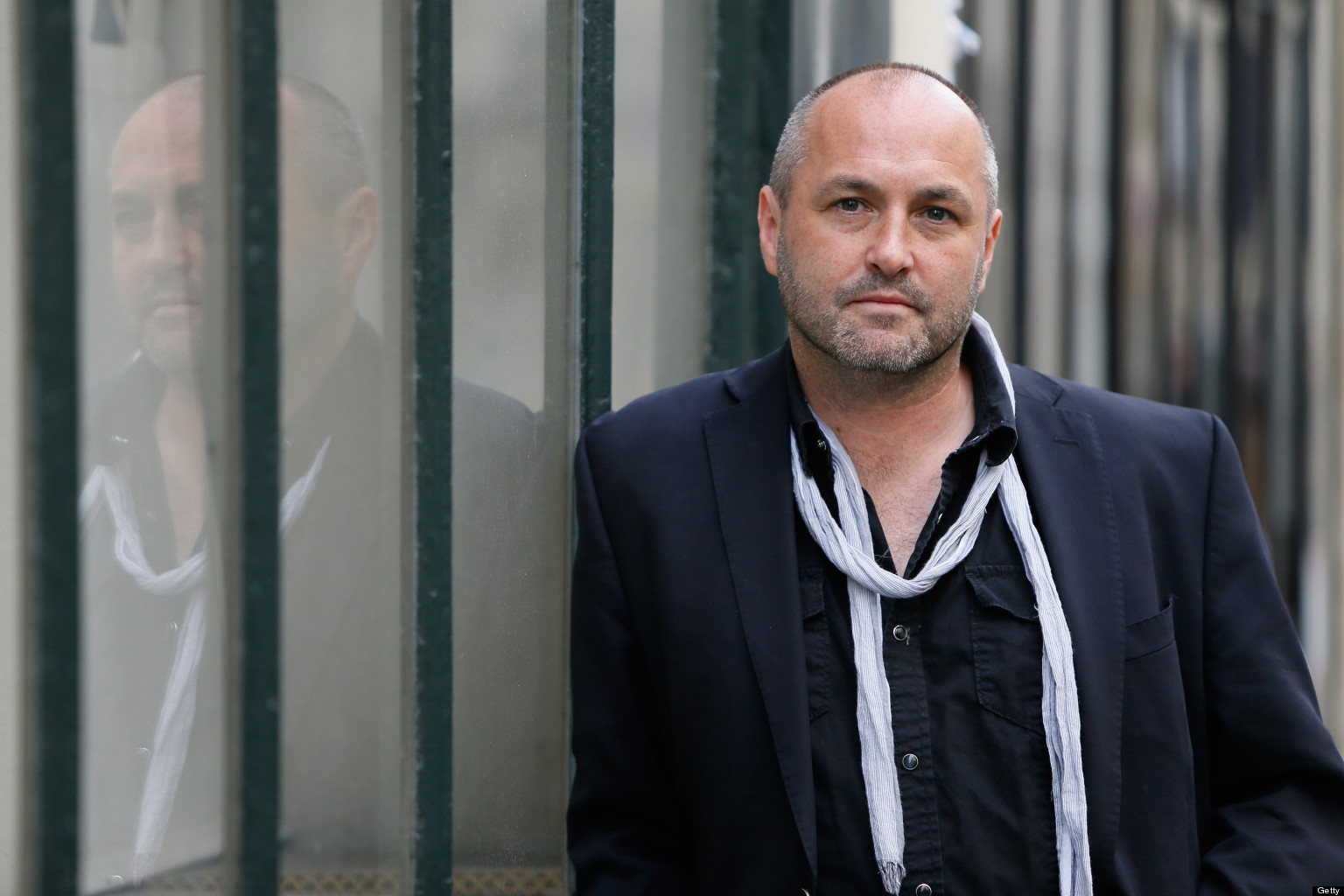
Award-winning Irish author Colum McCann was in New Haven, Conn., last week as part of his work with Narrative4, an organization of authors that seeks to promote empathy through story-telling. Leaving Yale University, the Ivy League institution in the heart of New Haven's downtown,  McCann was attacked when he attempted to intervene in a dispute on a street.

McCann reportedly suffered a concussion, a broken cheekbone, some broken teeth -- and "a temporarily bruised spirit."

Very temporarily. In a statement showing remarkable equanimity, McCann said:
“I suffered a few injuries but nothing that can’t be quickly healed. If anything, I was shaken out of the ruts of my ordinary perception, and I have been struck the genuine caring nature of people asking about how they can help out."
McCann said what he thought was “most important about this is that there are others who suffer far worse violence, and I think it’s important that we try to understand that the deep roots of silence are not helpful. We need to speak out against this sort of thing."

Narrative4 encourages people "to walk in each other's shoes and prove that not only does every story matter, every life matters."

Buddhist teacher David Loy, in his book, "The World is Made of Stories," says those very stories --  often disparaged as bolstering ego -- can lead instead to egolessness, the state where boundaries between self and other dissolve.