Friday, January 18, 2013

The warmth of compassion


When teaching on compassion, the Gyalwang Karmapa has continuously emphasised that feeling compassion towards other sentient beings was not enough. Our compassion has to be turned into action. As temperatures dipped to freezing point and below across North India, the Gyalwang Karmapa bought and distributed over a thousand warm blankets to Bodhgaya's poorest.
Several thousand people from Bodhgaya and nearby villagers, mostly women with small children, queued for hours at the gates to the Monlam Pavilion before the scheduled time of 3:00 pm. The Gyalwang Karmapa then spent nearly an hour inside the Monlam Pavilion personally handing out the thick woollen blankets to each delighted recipient. Their stressed and worn faces lit up as they received the Gyalwang Karmapa's gift, together with his compassionate blessing.
Later, as they dispersed across the surrounding fields clutching their new blankets, their delight could be clearly seen on their smiling faces. Later that evening, the brand new grey blankets could be seen wrapped around the shoulders of many of the beggars lining Bodhgaya's streets.
This active expression of the Gyalwang Karmapa's compassion has helped protect over one thousand people from the deadly cold. Every winter thousands of people, many of them homeless, die from cold across North India. Each of the thousand new blankets gifted by the Gyalwang Karmapa is made from thick wool, perfectly suited to the freezing winter conditions. 

Friday, January 11, 2013

Limping toward nirvana

I've been thinking about writing something about the IDP's Year-Long Immersion and Instructor Training  program since early December, when the early application deadline was approaching, but I wasn't sure what I could say. I was a graduate of the first iteration of the program, in 2011. (Originally, it was called the Buddhist Teacher/ Meditation Facilitator Training; my inner 12-year-old delighted in the idea of being a certified MF, but the name changed quietly during the year.)

I did not enter the program expecting to become a teacher. I was looking for a way to deepen my study of Buddhism, and this program appealed to me for a lot of reasons.

2011 was a transformative year. The IDP training was part of that, but I also did a two-week retreat with Lance Brunner, a fabulously kind and creative teacher; was a head oryoki server during that program, and did several weekend retreats in the Shambhala Sacred Path program. All of those things worked with other things, the warp and the woof of life and study.

Now I lead meditation and Buddhist groups. I don't really look at it as teaching -- I see it as sharing information that I've learned from studying and inviting people to explore how that works in their lives. Maybe that's possible because my groups are small. I don't live in New York, and to study and practice with people on a regular basis is difficult. Leading these groups gives me a chance to develop live sangha.

The Buddha said that you are your own best teacher. He told his followers not to take anything he said on faith but to try it for themselves and see if it was useful on the path toward the transformation of suffering.

And that's what the IDP program does -- help you find ways to teach the dharma, to yourself or others; in a class setting or through art, music, dance, blogging, or simply being at peace with yourself in a chaotic world.

Stephen Schettini is a former Catholic and Buddhist monk whose post on religion and righteousness on his blog, The Naked Monk, question life's big answers; expose yourself to doubt, caught my interest, partly because of this discussion on the IDP blog about the teacher training program

Schettini writes:
In Tibetan Buddhism, one’s teacher never gets angry or befuddled. Rather, he ‘manifests wrath,’ meaning that he puts on a show of anger because you need shock treatment, or silence because you’re unable to process the truth. You cannot be part of the community and question his motives. ‘The Path’ is itself code for steering clear of creative acts of discovery. When I eventually acted on the realization that I should find my own way or lose all self-respect, my connection to the community was severed. I was still there; I hadn’t yet even disrobed, but I was excluded from the circle of trust.
Buddhism, he says, was no different from the Catholic church is shutting down questions or challenges to its dogma.

Eventually, he writes, he went outside the organizations and back to study the lives of Jesus Christ and the Buddha. What he found were inspirational examples.
Buddhism was a crutch when I was psychically lame. The tools and the community healed me sufficiently that when the time came I was able to leap from my ivory tower and go on my way. Luckily, I landed on my feet. To ascribe it to destiny or karma is to retreat, pretending I have an explanation when all I have is a code word.
That's his story. It makes valid points, as does the IDP blog post. The Buddha -- who was reluctant to teach in the first place -- didn't set out to create Buddhism. I think he'd endorse using the path he laid out to find your own wisdom. But the path requires you to keep checking in, to see if your wisdom comes from your buddhanature or from dogma, and that's the value of it.

You will get something all your own out of the training. Intrigued? The application deadline is Tuesday, Jan. 15.


.

Saturday, January 5, 2013

Feminism and Buddhism

Lama Tsultrim Allione about Naropa in the 1970s: 
Although I enjoyed living in a Buddhist community, after several years I felt unhappy with the patriarchal, hierarchical, structured organization there. I also felt I was often parroting the words of Trungpa Rinpoche and losing touch with my experience. I was becoming an expert rather than a beginner.
Although I could appreciate the benefits of this structure, I felt the ever-increasing forms and rituals and my attempts to fit into the organization were creating an inner conflict and my practice was not progressing."


"While the critique of patriarchy and the revisioning of Buddhist thought and practice so that it is no longer informed by patriarchal bias is a political, ethical, and spiritual struggle that is essential and ongoing, it must never overshadow commitment to Buddhist practice." bell hooks

Friday, January 4, 2013

The 'end of history' illusion

One of the more distinctive concepts in Buddhism is non-self. It does not mean that you do not exist physically. It does mean that you don't exist as a permanent, solid, independent entity. "You" are as changeable as the weather -- and that's good news. You're not always angry, not always sad, not always giddy or goofy. You sometimes are all of those (I hope), but you cycle through them.

That not how we see ourselves, though. We think that we are certain things -- you react in a certain way that draws a response from someone and you say, "That's just how I am." Generous. Kind. Messy. Speedy. Tactless. Attentive. Whatever.

A new study shows that even when we acknowledge that we've changed over time, we don't expect that to continue.


"Is it really the case that we all think that development is a process that's brought us to this particular moment in time, but now we're pretty much done?" psychology research Daniel Gilbert asked.

He and his colleagues interviewed 19,000 people, asking some how much they had changed over the past 10 years and others how much they expect to change in the next 10 years.

"Young people, middle-aged people, and older people all believed they had changed a lot in the past but would change relatively little in the future," the study abstract says. "People, it seems, regard the present as a watershed moment at which they have finally become the person they will be for the rest of their lives."

This belief, described by Gilbert as the  “end of history illusion,” had practical consequences, leading people to overpay for future opportunities to indulge their current preferences, the study says.

The study doesn't address this, but Buddhism says you control how you will change. Turn your mind toward the dharma -- practice patience, exertion, kindness, generosity, and mindfulness -- and you will suffer less. Since you're going to change anyway, why not do it in a way that benefits all beings?


Wednesday, January 2, 2013

Know your intention

This is the time of year when a lot of people make resolutions. As the year ends, we look back over what’s happened in the last 12 months, what we liked, how we’d like to change in the New Year. That’s important stuff, and it’s in line with Buddhist practice – we’re using awareness, contemplation, and discernment.

But often people struggle to stick with their resolutions. A few days in, and old habits are calling us back to a comfortable way of doing things. Why is that and what can we do about it?

We can look at the intention that guides our action.

In Buddhism, intention is crucial. Karma is connected with intention, not just the action. If you kill a bug unintentionally, by stepping on it in the grass without knowing, there’s no karma. If you deliberately choose to kill that same bug, it may have consequences down the road. (One of those may be that you develop the idea that it’s OK to kill things.)

But you don’t have to believe in karma and rebirth to see the value of intention. If you set an intention, that leaves open many possible actions rather than limiting you to one right or wrong way of doing things.

Say that you have resolved to lose weight. You start a restrictive diet, an exercise plan. Soon you feel beleaguered, and it’s difficult to keep up.

If you look at the intention rather than the action, there’s space. Why do you resolve to lose weight? To look better? To be healthier? And why do you want to look better or be healthier – to attract a mate, get a new job, be able to do more things with your children or grandchildren, live with less pain or stress so you can enjoy life and be more pleasant? Knowing your intention helps you see your true goal. If it’s health, then it’s not just a matter of depriving yourself of fattening foods, it opens up the positive possibilities of eating good food, finding an enjoyable form of exercise, entering into any meal or exercise session with the thought that it is of benefit, rather than a chore.

It turns your mind toward the positive and away from punishment.

In Buddhist study, I learned the idea of framing things according to the ground, path, and fruition.

The ground is the view, the intention. Let’s say, I am a kind person and my intention is to be kind.

The path is the action, how you put that view into practice. Instead of yelling at people or speaking sarcastically, I speak gently and with kindness. I still make my point, but without attacking.

And the fruition is the result. When you act with kindness, others respond more kindly. Not always and not immediately. But I have found that they do.

This framework applies to any action you carry out – what is the ground, the intention? How do I manifest that? And is the result what I anticipated, or should I modify?

The Buddha included Wise Intention as the second step on the Eight-fold Path. Classically, he explains wise intention as the intention of renunciation, the intention of goodwill, and the intention of harmlessness.

Our intention, in the moment-to-momentness of daily life, isn’t always to be of benefit. It may be greed – to get the last doughnut before someone else snags it – or anger, to show up that driver who cut us off, or ego-clinging, to make ourselves appear to be benevolent in order to win the approval of others.

To know your intention requires awareness of your mind. For example, the intention of renunciation involves seeing that you are about to do something unskillful and rejecting that action, choosing instead to do the skillful thing.

Perhaps you’ve heard the Buddha’s advice to ask yourself before you speak: Is what I am about to say true, is it kind, is it necessary? That’s the teaching on intention in action. Is it true/renounce lies. Is it kind/have an attitude of goodwill. Is it necessary – is this the appropriate time and am I the appropriate person to say it/will someone be harmed by this.

Being mindful of our intentions and acting upon those which lead to harmlessness and wholesomeness help train the mind to gradually drop those intentions that are driven by anger, greed, desire, and attachment. Exploring our intentions can lead to deeper insights concerning insecurities, a need for attention, jealousy, or attachment to views.

Examining our intentions begins a natural process of building a foundation of ethics, and mindfulness is the tool that helps us see what we need to work on, what we need to let go of, and to act responsibly instead of reacting harshly or foolishly.

Friday, December 28, 2012

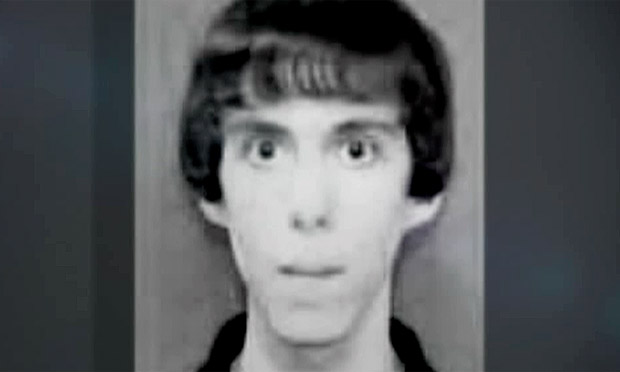
The loneliness of Adam Lanza (and each of us)

I've been thinking about Adam Lanza, the 20-year-old man who shot his mother in her bed, killed 20 children and six adults at an elementary school, then shot himself as police arrived at the scene.

Some people would prefer that you and I don't think about Adam Lanza. There was a move over social networking to urge people not to mention the Newtown, Conn., shooter by name, to let him fall into obscurity, even as we turn his victims into angelic superheroes whose only flaw was that they died. The theory is that part of the reason for his killing spree was to become famous, to gain notoriety.

There's been nothing offered yet in support of that assertion, though. Lanza destroyed the hard drive on his computer and seems to have left no notes or mission statements. He not only gave no indication that he was planning this, he left nothing to claim credit or explain it.

I can understand the desire to deny him any glory from his action, to negate his existence. But society already had negated Adam Lanza's existence -- and that's why we have to say his name now.

In "A Civic Perspective on the Newtown tragedy," Peter Alexander Meyers writes:
Our most widespread and tragic mistake has been to imagine the suicidal mass murderer as someone who lives outside of society, the ultimate and perverted individualist. For, no matter how isolated we make him out to be, even the loneliest loner is a social type. Adam Lanza was not an alien, not a monster, nor a machine. He was one of us. We share with him a social reality that is the common spring of both good and evil.
We develop as humans through relationship to other humans. We define ourselves by how we react to others. As Meyers writes, " If we ignore the fact that Adam Lanza and his action remained woven into the everyday fabric of social relationship, his violence appears, and will always appear, 'meaningless.'"

Lanza was described by virtually everyone who knew him who spoke to the media as a socially awkward loner who appeared to have no personal relationships --other than his mother, his first victim, with whom he lived. It seemed that no one reported ever having an on-going relationship with him. Classmates recalled occasional conversations. He was quiet in class and hugged the walls when he walked through the school hallways.

But humans long for connection -- heck, even animals and insects live in societies. Babies who don't get attention fail to thrive. We all feel lonely at times, disconnected from whatever group or social situation we're in. Most of us know ways -- skillful or not -- to work with that feeling. Apparently Adam did not.

Brother Pháp Lưu, a monk in Vietnamese Zen tradition of Thich Nhat Hahn, who grew up in Newtown, Conn., as Douglas Bachman, wrote a touching and insightful letter to Adam Lanza.
I used to play soccer on the school field outside the room where you died, when I was the age of the children you killed. Our team was the Eagles, and we won our division that year. My mom still keeps the trophy stashed in a box. To be honest, I was and am not much of a soccer player. I've known winning, but I've also known losing, and being picked last for a spot on the team. I think you've known this too—the pain of rejection, isolation and loneliness. Loneliness too strong to bear. ...
I don't think you hated those children, or that you even hated your mother. I think you hated your loneliness.
Loneliness is a tricky thing. In Buddhism, it's seen as a sign of progress, a recognition that we are responsible for ourselves, our own actions and their effects, our own reactions.  There's no one to blame but ourselves; no one whose approval is more genuine or informed than our own.

It's also the gateway to emptiness, the idea that we're all connected, that we all share the same innate potential to see how we are sickened by the poisons and to get well. Brother Pháp Lưu writes:
The way out of being a victim is not to become the destroyer. No matter how great your loneliness, how heavy your despair, you, like each one of us, still have the capacity to be awake, to be free, to be happy, without being the cause of anyone's sorrow. You didn't know that, or couldn't see that, and so you chose to destroy. We were not skillful enough to help you see a way out.
The Buddha says that kindness is a cycle, just like samsara. To be kind to others, you must know kindness yourself. To see others' loneliness, we first have to see it and accept it in ourselves, to know that we can tolerate our own fear of being alone so that we can connect to another and let them know that they are not alone in their loneliness. We are all alone. We are in this together.


Pema Chodron describes it as a transition from hot loneliness to cool loneliness.

Buddhist practice holds lots of paradoxes. You don't exist as a singular, permanent, independent self, but you are alone. You share the same buddhanature, the same inherent richness, of all beings, but you must experience that for yourself, not just believe others' assertions of it.

Brother Pháp Lưu gives us a hint of how the bodhisattva goes about reconciling all that:
Now we know you are there. You are not random, or an aberration. Let your action move us to find a path out of the loneliness within each one of us. I have learned to use awareness of my breath to recognize and transform these overwhelming emotions, but I hope that every man, woman or child does not need to go halfway across the world to become a monk to learn how to do this. As a community we need to sit down and learn how to cherish life, not with gun-checks and security, but by being fully present for one another, by being truly there for one another. For me, this is the way to restore harmony to our communion.


Thursday, December 27, 2012

Let your action move us to find a way out of loneliness

This is a letter written by Douglas Bachman, a Buddhist monk and student of the Vietnamese Zen Master and monk Thich Nhat Hanh, to Adam Lanza, the 20-year-old man who shot his mother, then killed 20 children and six more adults before killing himself at an elementary school in Newtown Conn. Bachman, now known as Br. Phap Luu, grew up at 22 Lake Rd. in Newtown. (Boldface is my addition)
Saturday, 15th of December, 2012
Dharma Cloud Temple
Plum Village

Dear Adam,

Let me start by saying that I wish for you to find peace. It would be easy just to call you a monster and condemn you for evermore, but I don't think that would help either of us. Given what you have done, I realize that peace may not be easy to find. In a fit of rage, delusion and fear—yes, above all else, I think, fear—you thought that killing was a way out. It was clearly a powerful emotion that drove you from your mother's dead body to massacre children and staff of Sandy Hook School and to turn the gun in the end on yourself. You decided that the game was over.

But the game is not over, though you are dead. You didn't find a way out of your anger and loneliness. You live on in other forms, in the torn families and their despair, in the violation of their trust, in the gaping wound in a community, and in the countless articles and news reports spilling across the country and the world—yes, you live on even in me. I was also a young boy who grew up in Newtown. Now I am a Zen Buddhist monk. I see you quite clearly in me now, continued in the legacy of your actions, and I see that in death you have not become free.

You know, I used to play soccer on the school field outside the room where you died, when I was the age of the children you killed. Our team was the Eagles, and we won our division that year. My mom still keeps the trophy stashed in a box. To be honest, I was and am not much of a soccer player. I've known winning, but I've also known losing, and being picked last for a spot on the team. I think you've known this too—the pain of rejection, isolation and loneliness. Loneliness too strong to bear.

You are not alone in feeling this. When loneliness comes up it is so easy to seek refuge in a virtual world of computers and films, but do these really help or only increase our isolation? In our drive to be more connected, have we lost our true connection?

I want to know what you did with your loneliness. Did you ever, like me, cope by walking in the forests that cover our town? I know well the slope that cuts from that school to the stream, shrouded by beech and white pine. It makes up the landscape of my mind. I remember well the thrill of heading out alone on a path winding its way—to Treadwell Park! At that time it felt like a magical path, one of many secrets I discovered throughout those forests, some still hidden. Did you ever lean your face on the rough furrows of an oak's bark, feeling its solid heartwood and tranquil vibrancy? Did you ever play in the course of a stream, making pools with the stones as if of this stretch you were king? Did you ever experience the healing, connection and peace that comes with such moments, like I often did?

Or did your loneliness know only screens, with dancing figures of light at the bid of your will? How many false lives have you lived, how many shots fired, bombs exploded and lives lost in video games and movies?

By killing yourself at the age of 20, you never gave yourself the chance to grow up and experience a sense of how life's wonders can bring happiness. I know at your age I hadn't yet seen how to do this.

I am 37 now, about the age my teacher, the Buddha, realized there was a way out of suffering. I am not enlightened. This morning, when I heard the news, and read the words of my shocked classmates, within minutes a wave of sorrow arose, and I wept. Then I walked a bit further, into the woods skirting our monastery, and in the wet, winter cold of France, beside the laurel, I cried again. I cried for the children, for the teachers, for their families. But I also cried for you, Adam, because I think that I know you, though I know we have never met. I think that I know the landscape of your mind, because it is the landscape of my mind.

I don't think you hated those children, or that you even hated your mother. I think you hated your loneliness.


I cried because I have failed you. I have failed to show you how to cry. I have failed to sit and listen to you without judging or reacting. Like many of my peers, I left Newtown at seventeen, brimming with confidence and purpose, with the congratulations of friends and the approbation of my elders. I was one of the many young people who left, and in leaving we left others, including you, just born, behind. In that sense I am a part of the culture that failed you. I didn't know yet what a community was, or that I was a part of one, until I no longer had it, and so desperately needed it.

I have failed to be one of the ones who could have been there to sit and listen to you. I was not there to help you to breathe and become aware of your strong emotions, to help you to see that you are more than just an emotion.

But I am also certain that others in the community cared for you, loved you. Did you know it?

In eighth grade I lived in terror of a classmate and his anger. It was the first time I knew aggression. No computer screen or television gave a way out, but my imagination and books. I dreamt myself a great wizard, blasting fireballs down the school corridor, so he would fear and respect me. Did you dream like this too?

The way out of being a victim is not to become the destroyer. No matter how great your loneliness, how heavy your despair, you, like each one of us, still have the capacity to be awake, to be free, to be happy, without being the cause of anyone's sorrow. You didn't know that, or couldn't see that, and so you chose to destroy. We were not skillful enough to help you see a way out.

With this terrible act you have let us know. Now I am listening, we are all listening, to you crying out from the hell of your misunderstanding. You are not alone, and you are not gone. And you may not be at peace until we can stop all our busyness, our quest for power, money or sex, our lives of fear and worry, and really listen to you, Adam, to be a friend, a brother, to you. With a good friend like that your loneliness might not have overwhelmed you.

But we needed your help too, Adam. You needed to let us know that you were suffering, and that is not easy to do. It means overcoming pride, and that takes courage and humility. Because you were unable to do this, you have left a heavy legacy for generations to come. If we cannot learn how to connect with you and understand the loneliness, rage and despair you felt—which also lie deep and sometimes hidden within each one of us—not by connecting through Facebook or Twitter or email or telephone, but by really sitting with you and opening our hearts to you, your rage will manifest again in yet unforeseen forms.

Now we know you are there. You are not random, or an aberration. Let your action move us to find a path out of the loneliness within each one of us. I have learned to use awareness of my breath to recognize and transform these overwhelming emotions, but I hope that every man, woman or child does not need to go halfway across the world to become a monk to learn how to do this. As a community we need to sit down and learn how to cherish life, not with gun-checks and security, but by being fully present for one another, by being truly there for one another. For me, this is the way to restore harmony to our communion.

Douglas Bachman (Br. Phap Luu), who grew up at 22 Lake Road in Newtown, Conn., is a Buddhist monk and student of the Vietnamese Zen Master and monk Thich Nhat Hanh. As part of an international community, he teaches Applied Ethics and the art of mindful living to students and school teachers. He lives in Plum Village Monastery, in Thenac, France.