Showing posts with label renunciation. Show all posts

Monday, March 3, 2014

Surrender to the present moment


“Surrender Dorothy,” the Wicked Witch of the West wrote in the sky in the movie “The Wizard of Oz.” What she meant was, “Give up. Stop fighting. Stop struggling.” 

Taken out of the “us vs them” context, that doesn’t sound so bad. No fighting, no struggling – sounds pretty good, actually.

In Buddhism, surrender is not about handing over our power to another entity or becoming subservient. It’s about giving up, not giving in – as the song says, “I’m gonna lay down my sword and shield … ain’t gonna study war no more.” It’s about surrendering our small, limited concept of ourselves in order to see the larger, interconnected, fullness of being. We give up the things that keep us trapped and gain freedom.

Surrender is similar to the concept of renunciation in Tibetan Buddhism. In “The Wisdom of No Escape,” Pema Chodron writes that “it has to go with letting go of holding back. What one is renouncing is closing down and shutting off from life. You could say that renunciation is the same thing as opening to the teachings of the present moment.”

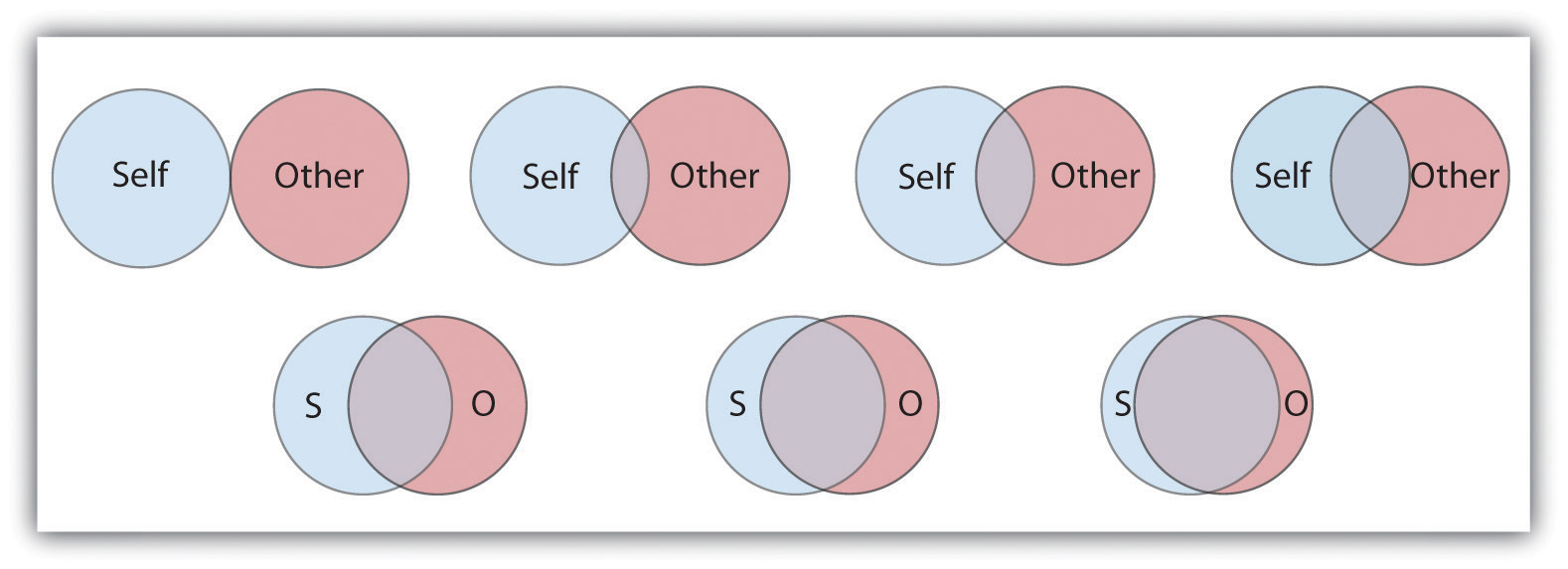
What we surrender are the self-defensive strategies that keep us separate from others, that lock us into the self-other binary. Instead of measuring ourselves and our accomplishments against others, clinging to what we’ve managed to accumulate, we see that we can be OK without that. “The ground … is realizing that we already have exactly what we need, that what we have already is good,” Chodron says.

It’s also seeing that everyone stands on that same ground, that everyone is inherently whole and worthy of respect and dignity. If we are truly living in that place, there’s no need to struggle, to fight for a bigger piece of the pie, to try to defeat everyone else and come out on top.

Letting go, surrendering the things that keep us apart and opposed ends the struggle and lets us relax.
“The purpose of a spiritual discipline is to give us a way to stop the war, not by our force of will, but organically, through understanding and gradual training,” Jack Kornfield writes in “A Path with Heart.” … “When we let go of our battles and open our hearts to things as they are, then we can come to rest in the present moment.”


Sunday, December 15, 2013

Does Instagram increase suffering?

The first truth of Buddhism is that suffering is inevitable. There's birth, old age, sickness, and death -- and Instagram. Actually, according to a New York Times article, "The  Agony of Instagram," the photo-sharing app is related to the Second Noble Truth, the cause of suffering.<--break->
Members of the Facebook generation are no strangers to the sensation of feeling a little left out when their friends post from that book party they weren’t invited to, or from someone’s latest transporting trip to the white sands of Tulum. Yet even for those familiar with the concept of social-media envy, Instagram — the highest achievement yet in social-media voyeurism — presents a new form of torture.
Instagram, with its various filters, allows people to post photos of their lives looking enviably
fabulous, the Times says -- creating dissatisfaction in people whose unfiltered lives are messier, less artistic. That dissatisfaction with our own lives and the belief that we'd be happy if only things were different is pretty much the definition of dukkha.

The Times reports that Fear of Missing Out, aka FOMO, or the anxiety and envy that arises from thinking everyone is having more fun than you, is a thing being looked at by researchers. Instagram is the biggest instigator, it says.

What to do, what to do? You could follow the path of renunciation and delete your Instagram account if it's that bothersome. Or use it train in mudita, joy in others' good fortune. Or transform the Instagram culture by posting affirmations.

Change your mind to change the world.


Friday, December 6, 2013

Drinking -- or not -- with mindfulness

Today marks the 80th anniversary of the end of Prohibition, the United States' attempt to outlaw liquor.
 
Supporters of Prohibition touted its passage in 1920 as a victory for public morals and health. But the law was difficult to enforce and widely flouted. It was repealed in 1933.

It brings to mind the Buddhist practice of renunciation, often misunderstood as abstaining from certain substances or actions.

As Barbara O'Brien writes:

Most broadly, renunciation can be understood as a letting go of whatever binds us to ignorance and suffering. The Buddha taught that genuine renunciation requires thoroughly perceiving how we make ourselves unhappy by grasping and greediness. When we do, renunciation naturally follows, and it is a positive and liberating act, not a punishment.
Buddhism does have precepts, which include abstaining from alcohol or other intoxicating substances. I've heard it said that one is important because it's more likely we'll break the other four when we're under the influence -- those propose refraining from killing, stealing, lying, and sexual misconduct.

But the precepts aren't a law like Prohibition or moral imperatives like the Ten Commandments for lay people, they are considered trainings that help us learn how our minds work and lessen grasping. Merely following the precepts, without contemplating your own reasons for thatm is blind faith, which the Buddha discouraged.  Don't take my word for anything without testing it out for yourselves, he told his followers.

So the issue, for those of us who aren't monks or nuns, is not entirely abstinence; it's our relationship to alcohol. What do we want when we reach for a drink? To feel less self-conscious? To fit in? To release tension? Does drinking provide that? Does it have other effects? What is our intention in choosing to have a drink?

And then there's the physical experience -- what does the desire for a drink feel like? The first sip? Do you taste it or just drink for the effects? And speaking of those effects -- how aware are you of what happens to your body and mind? Is there a point where you lose awareness of all that? What happens then?

It's holiday party time. You can choose to abstain from intoxicating substances, whether you've taken the precepts or not. But the practice is not mere abstinence -- the practice is to know what that experience is for you.

A friend of mine summed it up in a post she made on Facebook:

Profoundly grateful tonight on this, the 28th anniversary of my sobriety. It is a continual reminder of how grace is rooted in imperfection, and yet, shines through it.
Know your imperfections and be grateful for them. That's the crack where the light gets in.


Wednesday, January 2, 2013

Know your intention

This is the time of year when a lot of people make resolutions. As the year ends, we look back over what’s happened in the last 12 months, what we liked, how we’d like to change in the New Year. That’s important stuff, and it’s in line with Buddhist practice – we’re using awareness, contemplation, and discernment.

But often people struggle to stick with their resolutions. A few days in, and old habits are calling us back to a comfortable way of doing things. Why is that and what can we do about it?

We can look at the intention that guides our action.

In Buddhism, intention is crucial. Karma is connected with intention, not just the action. If you kill a bug unintentionally, by stepping on it in the grass without knowing, there’s no karma. If you deliberately choose to kill that same bug, it may have consequences down the road. (One of those may be that you develop the idea that it’s OK to kill things.)

But you don’t have to believe in karma and rebirth to see the value of intention. If you set an intention, that leaves open many possible actions rather than limiting you to one right or wrong way of doing things.

Say that you have resolved to lose weight. You start a restrictive diet, an exercise plan. Soon you feel beleaguered, and it’s difficult to keep up.

If you look at the intention rather than the action, there’s space. Why do you resolve to lose weight? To look better? To be healthier? And why do you want to look better or be healthier – to attract a mate, get a new job, be able to do more things with your children or grandchildren, live with less pain or stress so you can enjoy life and be more pleasant? Knowing your intention helps you see your true goal. If it’s health, then it’s not just a matter of depriving yourself of fattening foods, it opens up the positive possibilities of eating good food, finding an enjoyable form of exercise, entering into any meal or exercise session with the thought that it is of benefit, rather than a chore.

It turns your mind toward the positive and away from punishment.

In Buddhist study, I learned the idea of framing things according to the ground, path, and fruition.

The ground is the view, the intention. Let’s say, I am a kind person and my intention is to be kind.

The path is the action, how you put that view into practice. Instead of yelling at people or speaking sarcastically, I speak gently and with kindness. I still make my point, but without attacking.

And the fruition is the result. When you act with kindness, others respond more kindly. Not always and not immediately. But I have found that they do.

This framework applies to any action you carry out – what is the ground, the intention? How do I manifest that? And is the result what I anticipated, or should I modify?

The Buddha included Wise Intention as the second step on the Eight-fold Path. Classically, he explains wise intention as the intention of renunciation, the intention of goodwill, and the intention of harmlessness.

Our intention, in the moment-to-momentness of daily life, isn’t always to be of benefit. It may be greed – to get the last doughnut before someone else snags it – or anger, to show up that driver who cut us off, or ego-clinging, to make ourselves appear to be benevolent in order to win the approval of others.

To know your intention requires awareness of your mind. For example, the intention of renunciation involves seeing that you are about to do something unskillful and rejecting that action, choosing instead to do the skillful thing.

Perhaps you’ve heard the Buddha’s advice to ask yourself before you speak: Is what I am about to say true, is it kind, is it necessary? That’s the teaching on intention in action. Is it true/renounce lies. Is it kind/have an attitude of goodwill. Is it necessary – is this the appropriate time and am I the appropriate person to say it/will someone be harmed by this.

Being mindful of our intentions and acting upon those which lead to harmlessness and wholesomeness help train the mind to gradually drop those intentions that are driven by anger, greed, desire, and attachment. Exploring our intentions can lead to deeper insights concerning insecurities, a need for attention, jealousy, or attachment to views.

Examining our intentions begins a natural process of building a foundation of ethics, and mindfulness is the tool that helps us see what we need to work on, what we need to let go of, and to act responsibly instead of reacting harshly or foolishly.